a multicultural Research Library
Making multicultural Australia
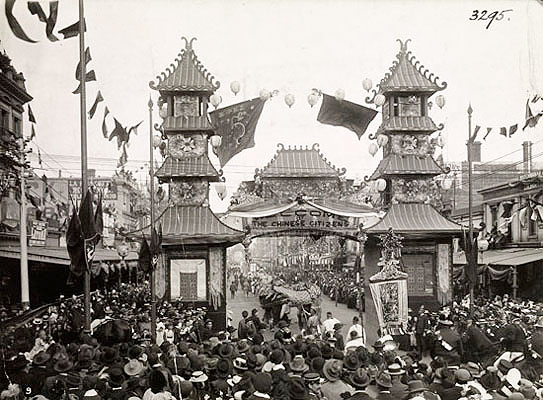
Welcome parade - celebrations of nationhood (Slide 8)
Andrew Jakubowicz.
At the end of 1901, when the Immigration Restriction Act barred further migration, there were some 2,500 living in Melbourne of a State population of 7,500. In May these 'citizens' constructed a celebratory archway, one of many gracing city intersections and welcoming to the royal visit that marked the opening of the Australia's first national Parliament.
Created:
unknown
Date Added:
03 February 2009
Source:
source not available
Format:
jpg (JPEG Image);
File size:
76 KB
Dimensions:
543 x 400
Transcript
At the end of 1901, when the Immigration Restriction Act barred further migration, there were some 2,500 living in Melbourne of a State population of 7,500. In May these ‘citizens’ constructed a celebratory archway, one of many gracing city intersections and welcoming to the royal visit that marked the opening of the Australia’s first national Parliament.
Three ceremonial dragons paraded through the city streets – a highlight of the celebrations of nationhood, according to the Melbourne Argus – and Loong, some 90 metres in length and the largest of them all came from Bendigo, not Melbourne.
State Library of Victoria collections
Chinese arch and procession picture
Accession H96.160/651 [Image Number: cc001003]
Chinese citizens arch for the Royal Visit
Photograph: gelatin silver, Harvie & Sutcliffe, 1901
View other images on Cultural Studies
 Victoria Religious Leaders (Slide 6)
- Kurdish trumpet layer
- Members of African women's choir
- Wedding at the St. Kilda Hebrew Congregation Synagogue
- David Wang initiated Melbourne's Chinatown project
- Italian gardeners: artisans and farmers - Angela Catanzaro (4)
View other Archival Images
- Writer Arnold Zable talks to audience
- Emilio and Maria Russo with wedding gifts
- Flyer for Cloud Gate dance theatre (slide 06)
- Emilio Russo on board the ship Florentia
- Brunswick Music Festival, 2006 (slide 19)
- Vietnamese celebration -1
Visit the multicultural Library for other documents, video, audio and images.